

Three problems with industrial policy
Plus: inflation staying hot and the stakeholder state


In today’s newsletter:
What is ‘Manchesterism’?
Young people baring the brunt of labour market pain
Inflation staying hot
Industrial policy is properly back in vogue. On Tuesday, Andy Burnham, Mayor of Greater Manchester, spoke about his economic approach. Claiming to be building “business friendly socialism”, an oxymoron if ever there was one, he defines five strategic industry sectors for the city, lays down specific locations for these activities, and now needs business partners who are not “exploitative” or “extractive” to make his planning a reality. All this he calls “Manchesterism”, and he wants the government to give him more devolved powers so he can make it happen.
At the same time, in Davos, the Business Secretary Peter Kyle told us he wanted a more “activist” economic policy. “I am betting big. And I am picking winners” - a phrase redolent of the 1970s, the disaster zones of British Leyland and British Steel, and hence one which has so far been avoided by even the strongest advocates of industrial policy so far.
It sounds so good. Governments, local and national, get behind business to support them to grow, provide jobs, and create wealth. But think harder. There are at least three problems with this approach.
First, how do Kyle or Burnham know what industries Manchester or Britain actually need? They may think they know - but in truth they are just looking at industries that are already successful elsewhere in the country or the world and saying “we want some of that”. It’s not a basis for economic policy. Suppose Manchester industrialists 200 years had said “British transport depends on horses and canals. What we need is strategic support for a stagecoach and barge industry.” Would anyone have bothered developing the first railway line in the world then? The truth is the industries of the future are not known to politicians: the knowledge is decentralised in the economy, in the entrepreneurs and experimenters. The best thing is to get out of the way and let them find what works.
The second problem is the famous “What is seen and what is not seen” problem first described by the French economist Bastiat in the mid-1800s. Yes, politicians can build a shiny new factory with public money. Everyone says “Great. Look at all the activity and all the jobs created.” That’s what’s seen. But no one thinks about what could have been done if the money had not been paid over in taxes but left in the hands of the people who earned it. That’s what’s not seen. Maybe, left to their own devices, they’d have done better. And at least if they hadn’t, it would only have been their own money they lost. We wouldn’t all be paying for it - as we do when the politicians get things wrong.
The final problem is more Manchester-specific. Andy Burnham says he wants more devolution. I don’t think he means it. What he wants is more public money channelled from the relatively wealthy south east to the somewhat less well off north west, then to be used as he sees fit. Real fiscal devolution would mean Manchester had to raise its own money and make its own choices. It wouldn’t get as much cash as it does with a central government transfer on top. And maybe voters wouldn’t like the Burnham vision when they had to pay for it. What Burnham really wants is a free hand to be an old-style city boss, channelling your money to pay for his pet projects. And if you don’t agree with him - best get out of the way.
All this is a false trail that doesn’t lead to real economic prosperity. Burnham should look back to the earlier meaning of “Manchesterism” instead. The Manchester School believed in free trade, laissez-faire, and economic freedom. They turned a provincial town into the “shock city of the age”, the vision of the future that people came from around the world to see. Burnham needs to read a bit less Mazzucato and a bit more Cobden and Bright if he really wants to succeed.
David Frost, Lord Frost of Allenton
Director General
The best way to never miss out on IEA work, get access to exclusive content, and support our research and educational programmes is to become a paid IEA Insider.
IEA Podcast: Director of Communications Callum Price is joined by Director General David Frost and Editorial Director Kristian Niemietz to discuss Manchesterism, industrial strategy, and Britain’s ‘Affluenza’ — IEA YouTube
New figures show damage done to young people by government policy
Responding to the latest labour market statistics from the ONS, Professor Len Shackleton, Editorial and Research Fellow said:
“The latest labour market figures continue to show the malign effects of recent government policy, with higher minimum wages and national insurance contributions plus rising business rates having a particular impact on retail and hospitality, where payrolled employment has fallen sharply. This in turn particularly hits young people who account for a sizeable chunk of the workforce in these sectors.
“Young graduates will also have been hit as traditional graduate recruiters have cut back due to growing uncertainty and possibly the longer-term impact of new uses of AI. The unemployment rate for all workers is 5.1%, markedly higher than in recent years (discounting the special circumstances of Covid), but for 18-24 year olds it is now standing at 13.7%. This is worrying not just for the current state of the economy, but because prolonged unemployment in one’s early twenties is known to have damaging effects on future career paths.”
Read more: Rachel Reeves told ‘the future is bleak’ as 1.5m more given ‘no work’ benefits, The Express
UK inflation continues to run relatively hot
Commenting on the latest inflation figures, Julian Jessop, Economics Fellow, said:
“The renewed acceleration in inflation in December, from 3.2% to 3.4%, was largely expected but no less unwelcome.
“The jump in the cost of living over the last few years is still being cemented in, while slowing wage growth and rising job insecurity will keep consumer confidence and spending subdued.
“The pickup in headline inflation was partly due to increases in tobacco duties and air fares, which the Bank of England had already anticipated.
“However, inflation also rose in the food and hospitality sectors, reflecting the continued pass-through of higher labour and other costs resulting from policy choices.
“The government is seeking to blame ‘global headwinds’ for the increase in inflation since the summer of 2024. But the reality is that the UK has become an outlier again. In contrast, inflation has remained close to 2% in the euro area.
“UK inflation is still likely to fall to around 2% in April as regulated prices rise by less than in 2025. However, underlying cost and price pressures remain sticky, and medium-term inflation expectations are too high for comfort.
“The persistent weakness of economic activity and especially of the labour market means the door is still open for at least one more cut in interest rates in the coming months, but February’s MPC meeting is probably too soon.”
News and Views
The mistakes of Manchesterism, Head of Lifestyle Economics Chris Snowdon dissects Andy Burnham’s approach to growth, The Critic
“On both the left and right, there is a belief in a perpetual motion machine that can turn £100 billion of borrowing into £100 billion of tax revenue. This is, by and large, a delusion. Manchesterism is being built on borrowed money and when the music stops it will still be “in hock”.”
The Stakeholder State, David Frost, Chris Snowdon, and Callum Price discuss what the stakeholder state is and why it is a problem, IEA YouTube
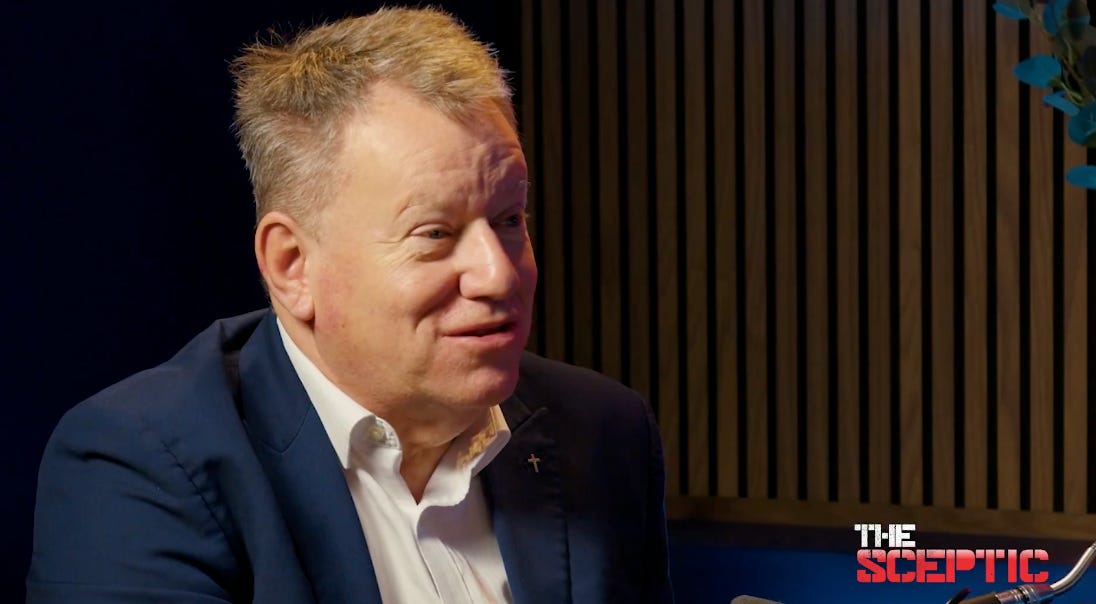
The Stakeholder State continued, David Frost spoke to The Sceptic podcast about why Britain must reclaim free-market thinking, The Daily Sceptic
Our Cost of Net Zero report was discussed on ‘More or Less’, in a debate about what the real cost of net zero is and why there isn’t any official modelling done on the price difference when compared to an entirely non-net zero pathway, BBC Radio 4
Getting kids off social media isn’t common sense, Andy Mayer writes in CapX
“Children can learn to drive on private land. They can drink alcohol in moderation under supervision. Smoking is prohibited – but no one seriously claims that liking a dance video causes lung cancer or shrivels your testicles. Meanwhile, the tools for parental regulation of social media are already extensive and far more sophisticated than hiding the key to the drinks cabinet.”
The secret costs of net zero, our work picked up in The Spectator
“Last week, a new report by the Institute for Economic Affairs argued that the cost of transitioning to net zero could be billions – even trillions – more than some government forecasts. That may sounds worrying, yet in many ways it still understates the problem. Net zero isn’t just hurting our energy sector, it has a complete stranglehold over the entire British economy – and it is making us all poorer.”
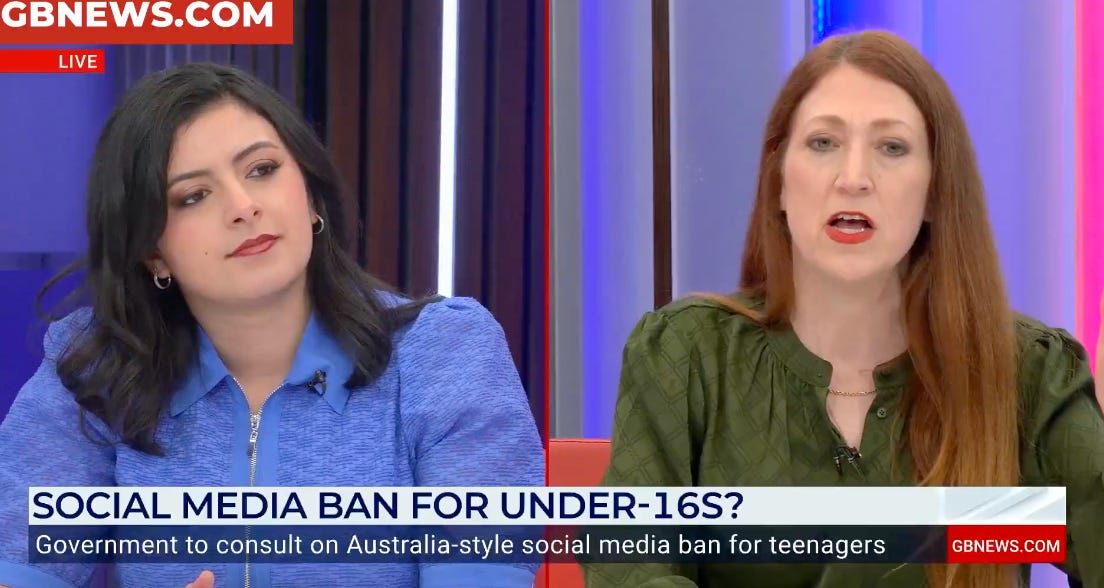
'Parents have to set boundaries. It's their responsibility, not the government's!', Head of Media Reem Ibrahim debates a social media ban for under-16s, GBNews
Net Zero: a multi-trillion-pound catastrophe, Energy Analyst Andy Mayer writes in Spiked
Politicians of all stripes have been systematically dishonest about the true cost of the green transition.
Britain must stop subsidising the Ugandan regime, Harrison Griffiths writes about how British aid supports an anti-democratic regime in Uganda and what that means for its champions of liberty in The Critic
Why central planning can’t solve climate change, Reem Ibrahim explains the folly of subsidies, CapX
Why Smart People Flee Their Own Countries, Elena Panaritis interviewed by Reem Ibrahim, IEA YouTube
The True Cost of Net Zero? Reem Ibrahim breaks it down, IEA YouTube