Reawakening Britain
Plus: OBR forecasting failures and excessive producer responsibility

In today’s newsletter:
Is Britain Broken?
Against accelerationism
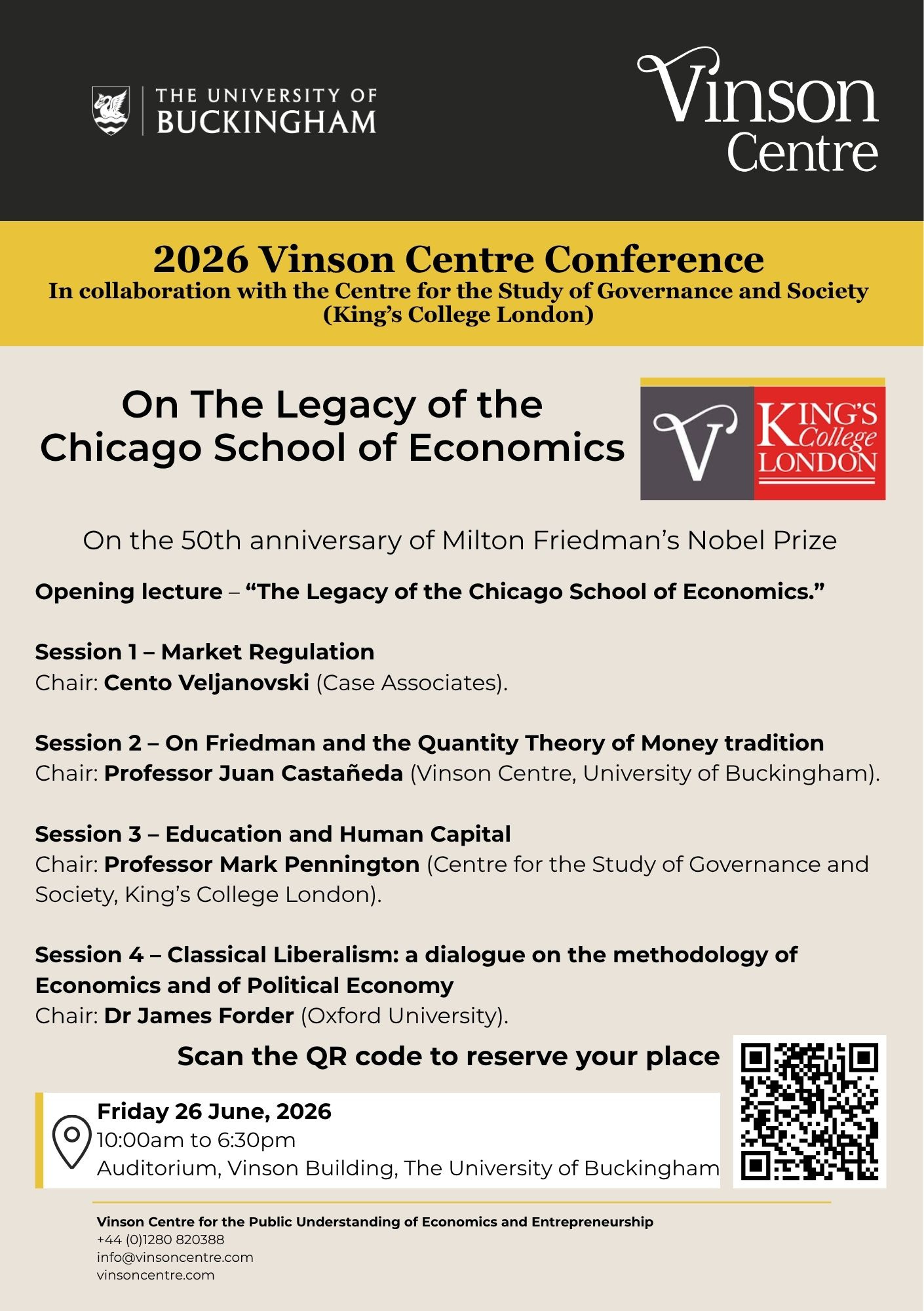
Register for the 2026 Vinson Centre Conference
The shocking thing about Britain in 1955, the year the IEA was founded, was not how socialist it was; it was how popular its socialism was. Most people thought it right and proper for the state to run coal, gas, electricity, railways, airlines. All the experts agreed that there needed to be a planned economy. The vogue word was “tripartite”, meaning that corporations, trade unions and government ministers should come to agreements and then roll them out nationally.
We are a change-averse species, and six years of wartime mobilisiation had conditioned British people to expect government direction. No, not just to expect it – to demand it. The task of the IEA was therefore not simply to explain how regulations might be lifted or industries denationalised. It was to reawaken the desire for freedom in an electorate that had forgotten it.
That, it seems to me, is our task today. The popular mood, especially since lockdown, is closer to what it was in the post-war years than to what it was in the early 1990s when I first attended IEA events as an undergraduate. The reason we have such high levels of spending, taxation and debt is that we vote for them – in effect, if not in intention. We won’t get back to growth until we are ready to back candidates who want small government.
The job of the IEA is similar to what it was 70 years ago. We need to engage at every level – not just with MPs, but with voters, especially first-time voters. We need to explain freedom to a generation that can barely remember it. The politics that most teenagers get in their social media is almost uniformly illiberal, usually in the Polanski/Corbyn sense, occasionally in the Tate/Fuentes sense. Liberty is no longer part of students’ mental map.
We need to communicate with that generation in language they understand and through media they watch. We need to adapt our vernacular to an age that has become more visual than literary. We need to use the full potential of AI, something think-tanks have so far been slow to do.
Shortly before he died in 2006, our founder Ralph Harris told me: “I haven’t really said anything new since 1955; I just keep updating it”. That updating now takes forms that even Ralph, cheerful genius that he was, could not have imagined. But the vision is still his. He took Britain, in one generation, from Attleeism to Thatcherism. The acceleration of technology allows us to make the same move even faster. Let’s get cracking.
Lord Hannan
Director General
The best way to never miss out on IEA work, get access to exclusive content, and support our research and educational programmes is to become a paid IEA Insider.
IEA Podcast: Director of Communications Callum Price and Editorial Director Kristian Niemietz are joined by our new Director General Lord Hannan for his first IEA Podcast to discuss the latest OBR forecast assesment, the Home Secretaries decision to revoke the visas from two left-wing commentators, and the latest wealth tax arguments, IEA YouTube
Is Britain Broken?
On the 1st June, the IEA and Guido Fawkes hosted an exclusive live panel debate featuring Fraser Nelson (The Times), Zia Yusuf (Reform) and David Frost (IEA), chaired by Adam Cherry (Guido Fawkes) to debate the question is Britain broken?
If you missed out, watch back now!
Callum Price wrote up what we learned for ConservativeHome:


News and Views
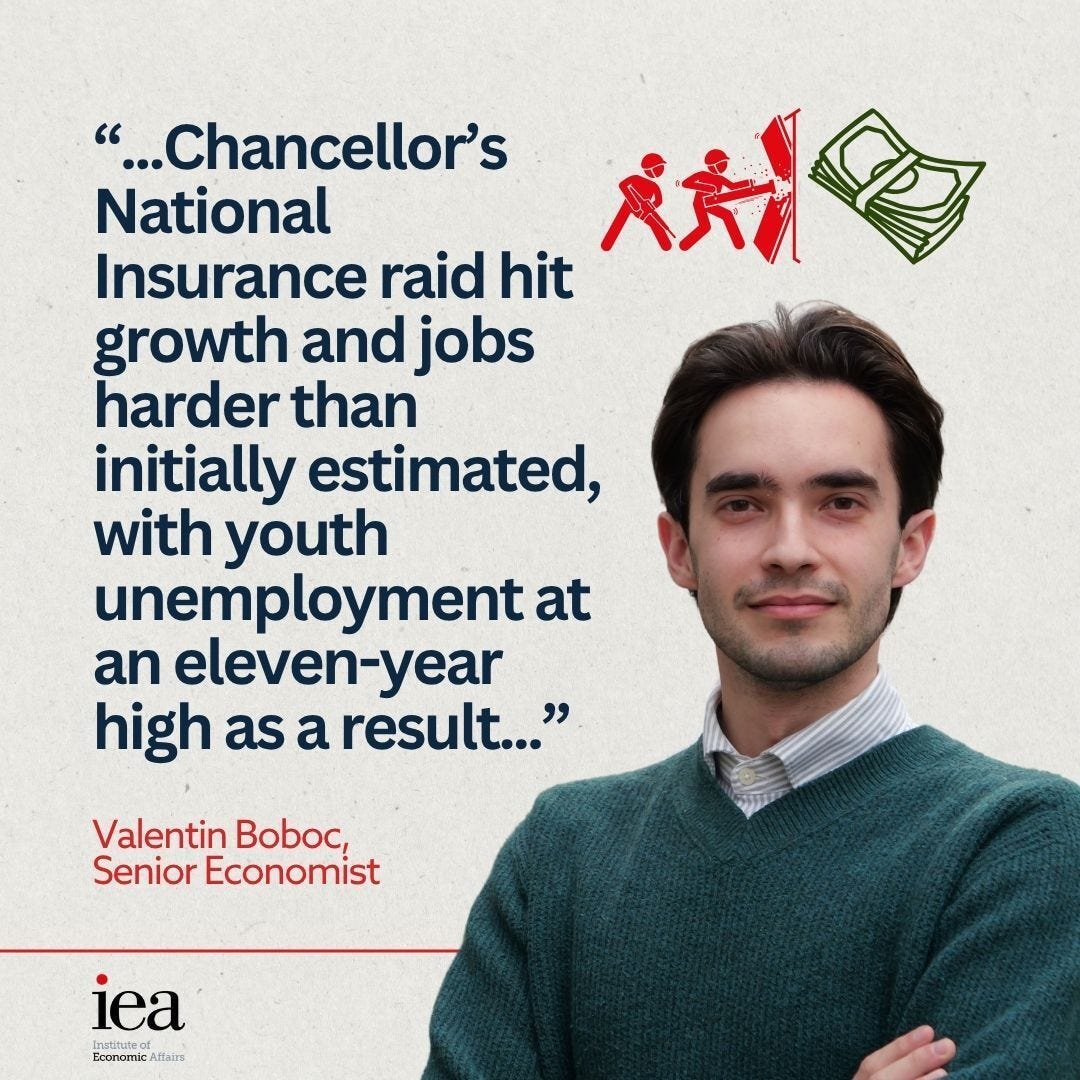
“The only sustainable route to fix our public finances is a combination of economic growth and spending restraint”, Senior Economist Valentin Boboc on the OBR’s growth forecast evaluation, The Express
“The OBR has now conceded that the Chancellor’s National Insurance raid hit growth and jobs harder than initially estimated, with youth unemployment at an eleven-year high as a result. The only sustainable route to fix our public finances is a combination of economic growth and spending restraint. Trying to plug the gap with tax rises only digs the hole deeper.”
“Taken individually, they are a nuisance. Taken together, they are shattering.” Christopher Snowdon on why Excessive Producer Responsibility is fuelling inflation and squeezing British industry, The Critic

Grid costs and clean energy subsidies to hit £40 billion a year, IEA analysis on the cost of renewables picked up on GB News
Clean energy subsidies and grid costs will hit £40billion a year by 2030, an analyst predicts. This £20billion increase from last year’s prices is equivalent to around £700 per household, according to a paper from think tank, the Institute of Economic Affairs.
Did Capitalism Actually Help the Poor? Steve Davies gives a talk on what the long history of economic growth tells us about how the modern world came to be, IEA YouTube
"80 per cent of the cigarettes smoked in Australia last year were illicit. The legal market is on the verge of disappearing."Christopher Snowdon on the black market catastrophe that Britain’s policymakers are refusing to learn from, in The Critic

Events and Opportunities
The 2026 Vinson Centre Conference