



Two years after first airing the idea of reviving the postwar New Towns programme (while still in opposition), the Starmer government recently finally identified seven sites. In a best-case scenario, these projects could, over time, add close to 200,000 housing units to the country’s housing stock. It is not the solution to our housing woes, and it is not even a huge step in that direction, but every little helps.
A lot of people on the political Right are instinctively suspicious of New Towns, because the whole concept feels a bit socialist to them. Why should a bunch of bureaucrats and town planners get to decide where people are allowed to live? What next – New Diets and New Dress Codes imposed by government apparatchiks?
This would be a fair criticism if we had an otherwise liberal planning system. In my ideal world, there would indeed be no such thing as a Whitehall-led New Town programme. There would be lots of privately planned and privately financed developments of all scales and sizes, some of which might well look a bit like a New Town, and there might be local initiatives by fiscally self-funding local authorities to create new settlements. But none of those projects would ever make it anywhere near the Housing Secretary’s desk. The Housing Secretary (if such a position still exists) would probably never even know the names of these places.
But alas, we are a million lightyears away from my ideal world. We already have a system of nationalised development rights, which means that development always involves the decisions of town planners and bureaucrats. Within that system, I don’t see why one large development project of 10,000 housing units is ‘more socialist’ than ten small ones delivering 1,000 housing units each.
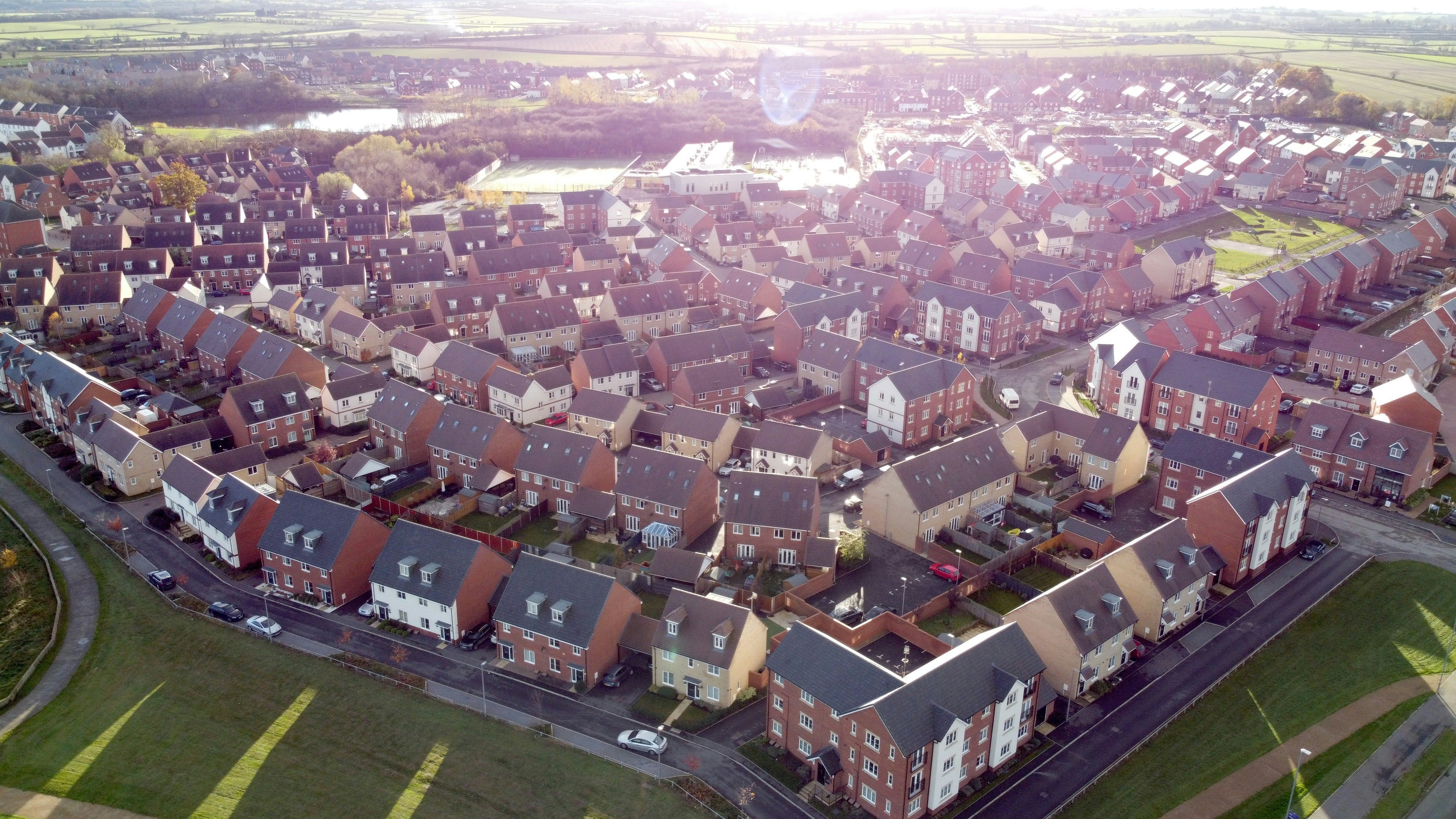
New Towns are mostly remembered as a postwar policy, but there were projects you could describe as ‘New Towns’ well before then. Over on the Works In Progress Substack, the economic historian Samuel Watling has summarised their history. Broadly speaking, the New Towns of the 18th and the 19th centuries were largely private enterprises, while the interwar New Towns tended to be local government initiatives, and the postwar New Towns were driven by the national government. Watling defines a successful New Town as one which broadly replicates the economic outcomes of the nearest economic centre, and an unsuccessful one as one which lags noticeably behind. He spots a clear pattern: the successful New Towns were the ones that became closely economically integrated with the nearest economic centre, either because of geographic proximity or good transport connections. The struggling ones were the ones that tried to form self-contained economic units. New Towns are fine if their aim is simply to satisfy housing demand, but not if they become part of a grand plan to redesign economic life.
Put differently, the successful ones were the ones that accepted the country’s economic geography as it was, and went with the grain. The unsuccessful ones were the ones that tried to ‘correct’ the country’s economic geography, because the planners thought they knew better. It is this latter approach which can be reasonably described as ‘socialist’. New Towns, then, are not intrinsically socialist – but they can become a socialist tool in the hands of people who think like socialist planners.
Suppose a place has a high employment rate, high productivity figures and high wages, but also high housing costs. It is not a Hayekian ‘pretence of knowledge’ to point out that that place probably needs some housing nearby. But it very much is a Hayekian pretence of knowledge if you try to rip up a functioning economic unit, and shift economic activity around, because you think it should take place somewhere else instead.
I’m not particularly familiar with any of the places where Labour’s New Towns are supposed to go, but they seem to be either close to an identifiable economic centre, or well connected to one. If so – these are not socialist New Towns. They look a lot more like the successful than the unsuccessful predecessors.
That’s a good thing – but it does not make the New Towns a brilliant policy. (‘Not socialist’ is a low bar indeed!) The danger is not so much that the Government will build Magnitogorsk-on-Thames, but that they will overburden their New Towns with all kinds of social and environmental requirements which threaten their viability. This is what they are already doing with conventional housing developments, which is why housebuilding rates refuse to go up. While a welcome step, New Towns cannot be a substitute for a wider overall of the housing and planning system.
 | A guest post by
|